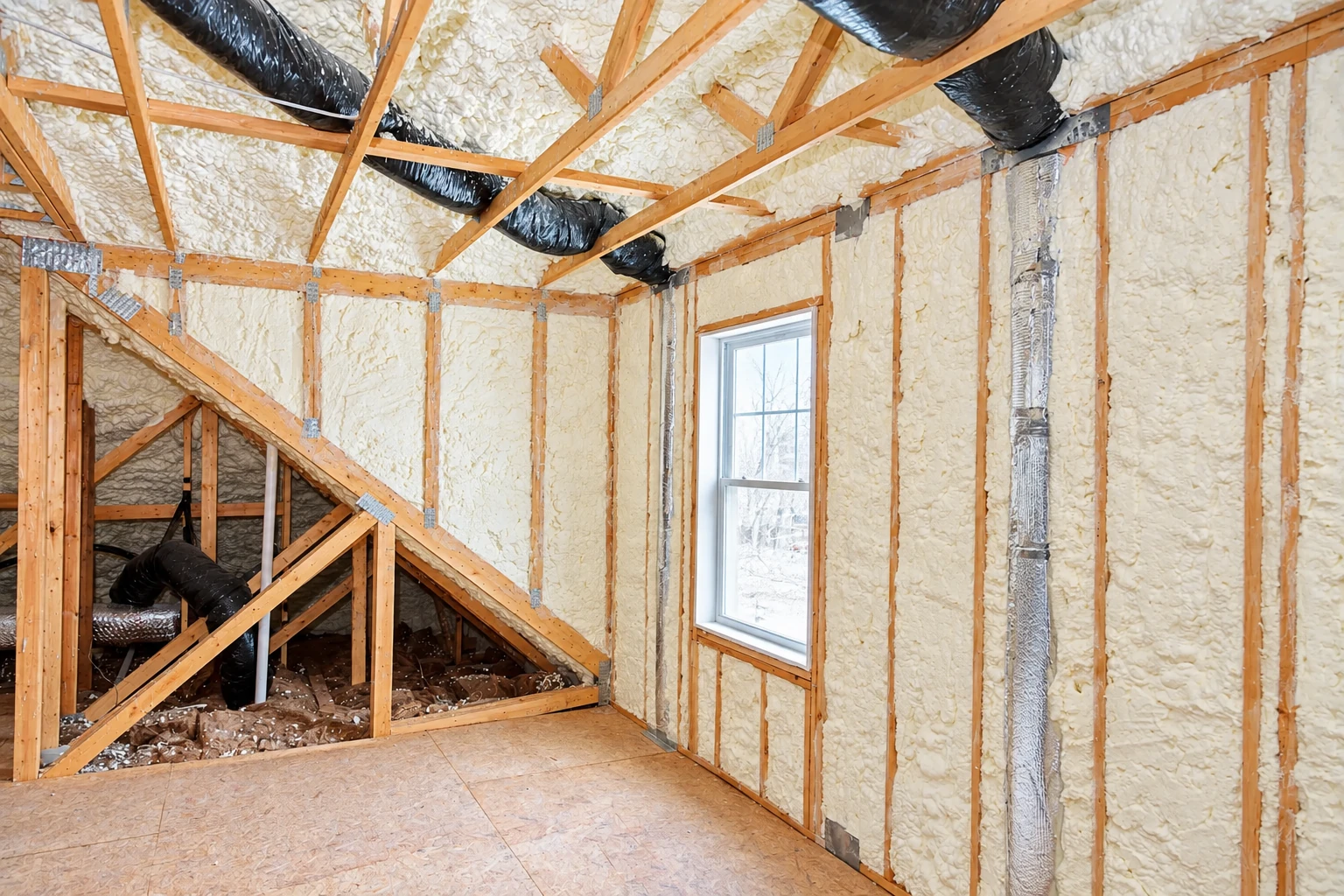
Drafts along the top wall
A cold draft near the ceiling line usually means outside air is slipping in at the rim joist, and sealing it there is often the quickest improvement we can make.
Cold floors or a drafty basement? We look for water first, then seal and insulate in the right order so your house holds its heat.
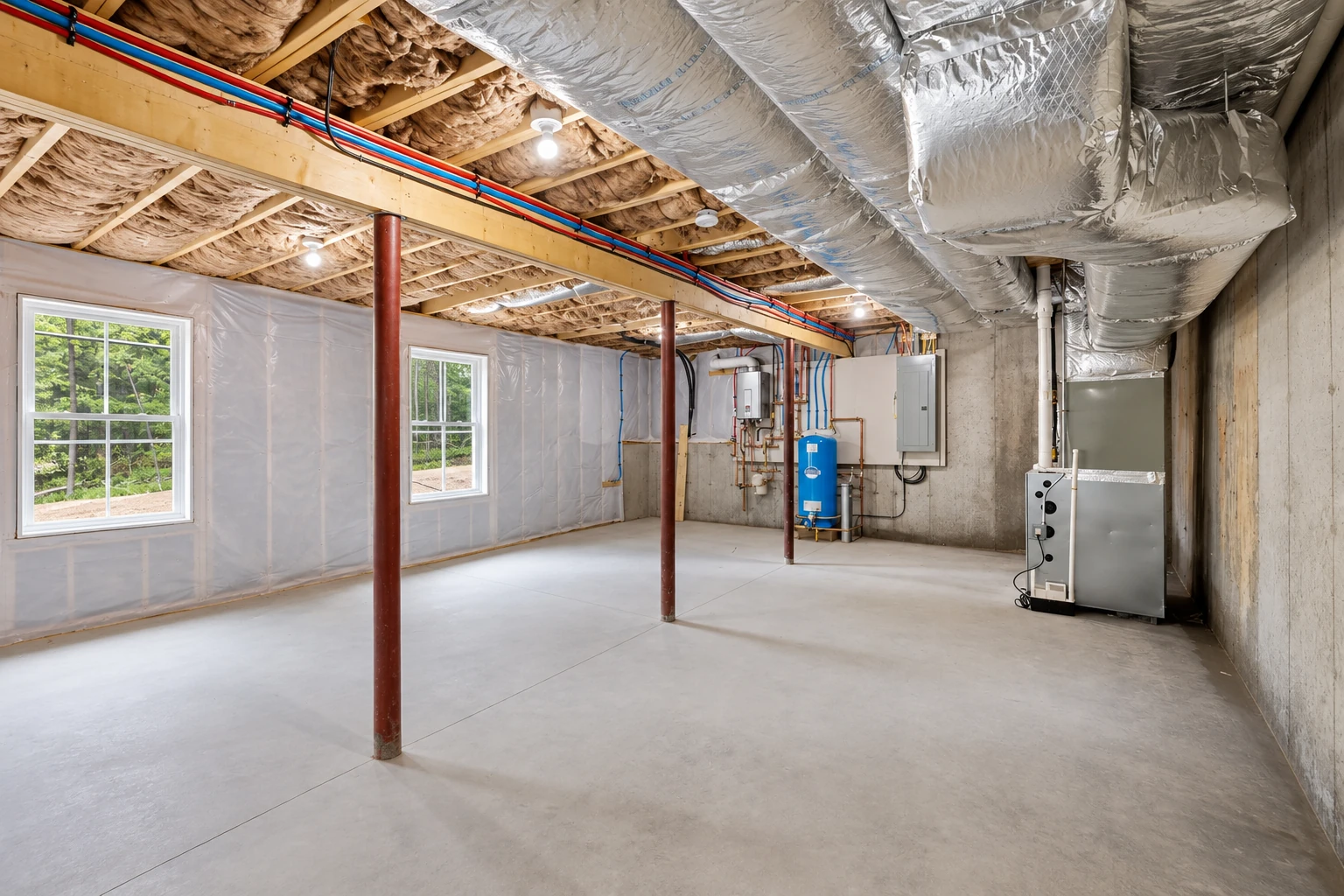
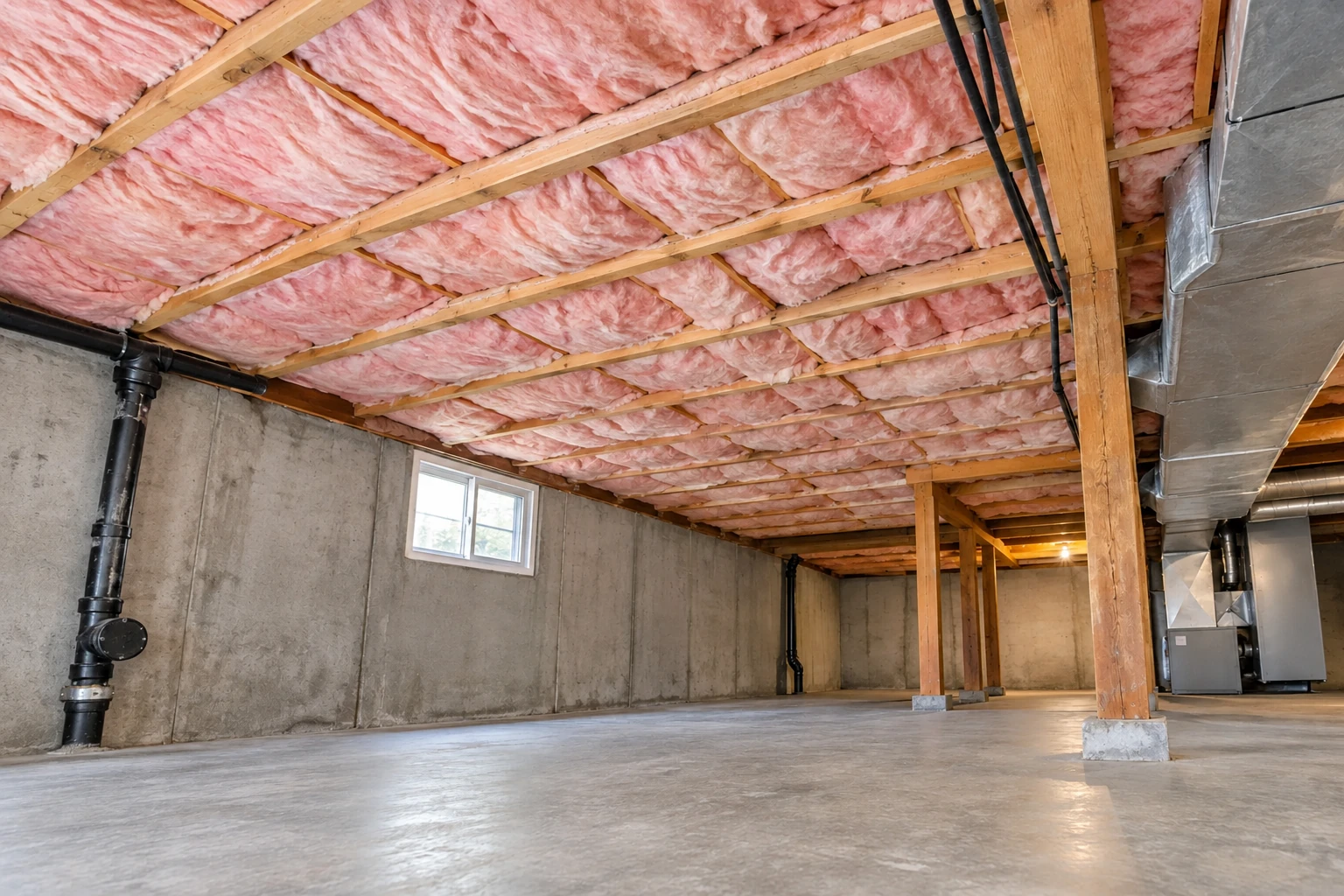
Basement insulation in Duluth seals and insulates the rim joist, the wooden band where your house rests on the concrete foundation, and the foundation walls when that makes sense, so the basement holds heat and the floors above feel warmer.
Most calls start with a draft along the top of the basement wall, a chilly floor in the room above, or a basement that never quite warms up. The price depends on how much we do, whether that's the rim joist alone or the walls too, how easy it is to reach behind storage or finished walls, which material fits, and whether a water problem has to be fixed first. The schedule turns on the same things, plus any permit the city requires, so I come out, look at the basement myself and write up an estimate with your own figure.
We're based in Duluth and do this work in Superior, Hermantown, Cloquet and other cities around the Twin Ports, where plenty of older homes still have a rim joist nobody has ever sealed.
I come out to see your basement and write up the estimate, and I'm on site with our crew when the work is done, so the person who planned it sees it through.
When we finish, I walk you through what we found, what we did and why, so you know what's behind the walls of your own house.
We clean up as we go and before we leave, because your basement is usually where the laundry, storage and furnace live, and you shouldn't find our mess there later.
In a kitchen, the prep is finished before service starts, and I run a basement job the same way. Before we talk about the walls, I'll ask about any past water and look for stains, a white crust on the concrete or a musty smell, because a damp basement needs that fixed first, and insulation over a wet wall only hides the trouble.
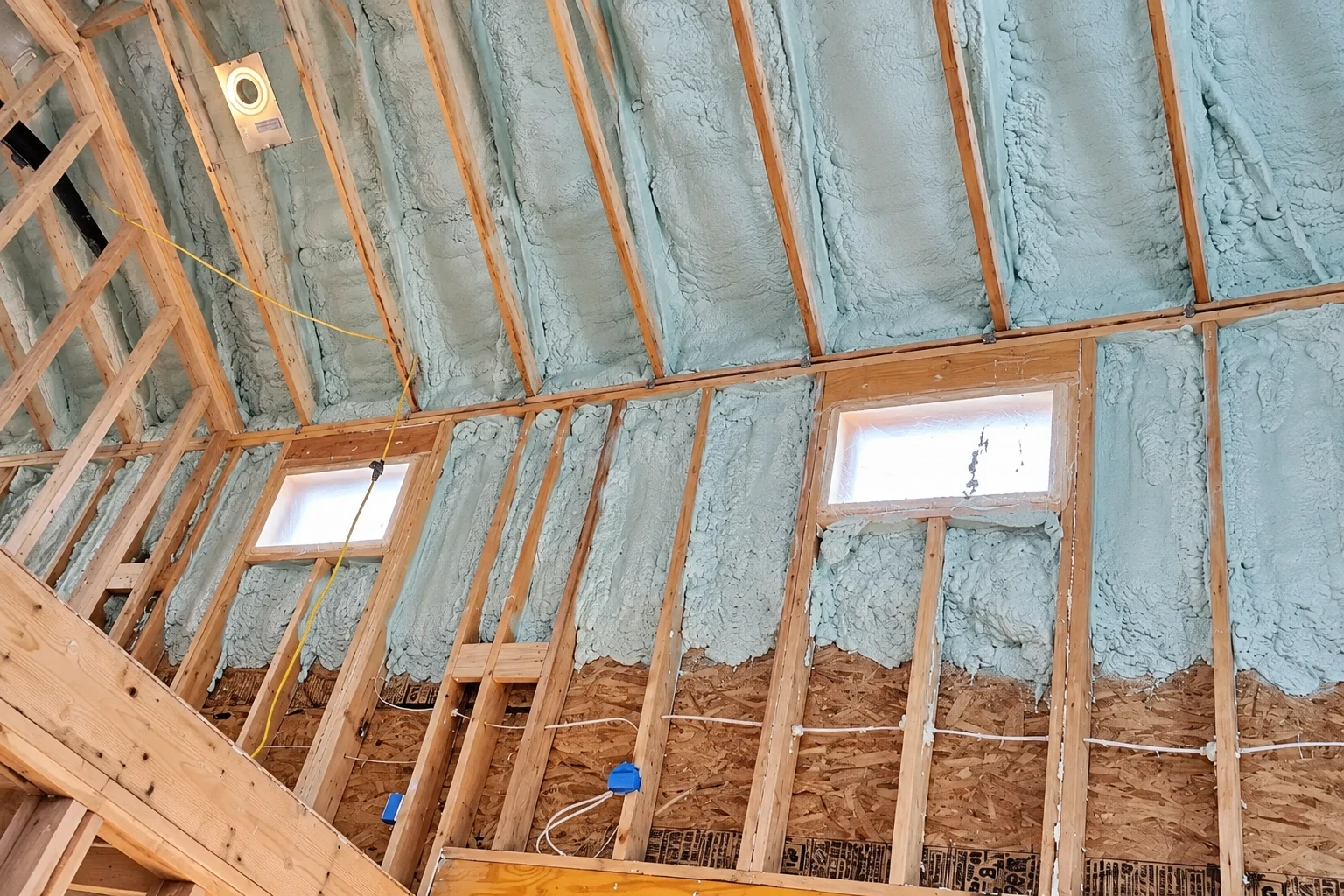
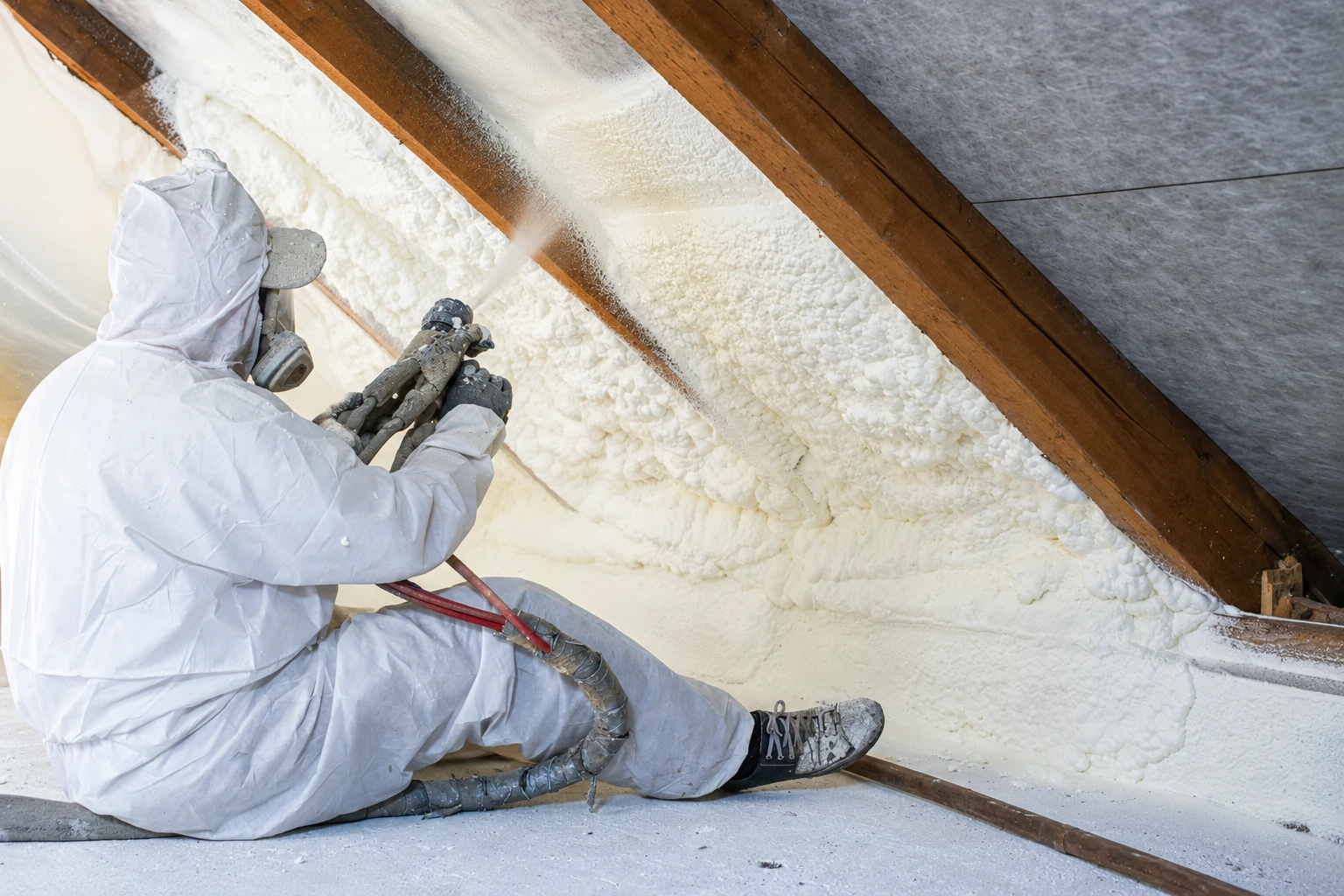
With the water question settled, I usually suggest starting at the rim joist, since a little work there does a lot of good. We begin with air sealing, which means closing the gaps around pipes, wires and the joint where wood meets concrete, because insulation can't do its job against a steady draft. Foam costs more than some options, but it seals air while it insulates, so at the rim joist I usually think it's worth it. We'll go over closed-cell foam insulation, a dense foam that also blocks moisture, and open-cell foam insulation, a lighter foam, to see which suits your basement.
If the walls need work after that, we'll decide together which side to insulate, and the questions further down explain that choice.
A cold draft near the ceiling line usually means outside air is slipping in at the rim joist, and sealing it there is often the quickest improvement we can make.
When the floors over the basement feel cold, the basement below is often losing heat through unsealed gaps, so fixing the rim joist usually helps the rooms above too.
If you keep the basement warm for a workshop, laundry or playroom, bare walls are giving that heat away, and the rules for heated basements are covered below.
Damp patches or water beading on the foundation tell us to check moisture first, so we find the cause before deciding what, if anything, goes on that wall.
Send the form and we'll reply within one business day to set a time. I'll come out, look at your basement myself and write up a free estimate, with no obligation.
Tell us about leaks, wet spring thaws or stains, even old ones, because your basement's water history decides whether we start on the walls or hold off.
Let us know if you keep the basement heated, since a warm living space and a cold storage area call for different plans on the walls.
If you'd like to finish the basement someday, say so now, because the insulation should be planned around the walls and rooms you'll build later.
These examples show foam at the rim joist, board on foundation walls and finished basement layouts, so you can point to what you'd like.
Practical answers on where to start, which walls to insulate, water, permits and who's allowed to do the work in Minnesota.
Start at the rim joist, because it's the simplest and least expensive part of a basement to insulate and it brings the best return, so it's the part to price first on a tight budget. The state's basement guidance recommends rigid foam cut to fit and caulked or foamed in place there, not fiberglass, since fiberglass doesn't seal out air.
Outside is better for warmth and for keeping moisture and mold away, though on an existing house it usually costs more. Inside walls are hard to insulate properly because of mold and moisture risk, and the state's guidance says to leave them bare so they can dry unless your basement's moisture risk is very low.
Yes, fix the water first. Finishing over a moisture problem can make health conditions worse and cause real damage. Water problems are solvable, but doing it right costs money, so plan and budget for it. Radon belongs in the same conversation, since the state health department says 2 in 5 tested Minnesota homes have levels that are a major health risk.
Yes, the state energy code says the walls of a basement kept heated or cooled get insulated from the top of the wall down to the top of the footing or a set depth below the ground outside, whichever is less. When I see your basement, I'll go over how that rule fits your walls and the method we choose.
Ask the city before work starts, because Duluth requires inspections for all work that needs a permit, and its construction services and inspections office at City Hall is the place to check. You don't have to sort it out alone. I check the permit rules with the city ahead of time and tell you whether we'll pull the permit or what you'll need to do.
Minnesota requires a license for residential building contractors and remodelers who contract with a homeowner to improve a home using more than one special skill. Anyone offering building improvement work in the state also has to register with the state first, except where the law says otherwise, and you can ask a contractor to show that registration. We're fully licensed and insured.
Call (218) 206-2942 or send our contact form, because one look at your rim joist usually shows where the cold is getting in. Thank you.