
A bare dirt floor
Exposed soil gives off moisture vapor that rises into the crawl space and the floors above it. A ground cover is the simplest way to hold that down before you do anything else.
Bare dirt under the house and a damp smell? We cover the ground and run the liner up the walls to hold that moisture down.
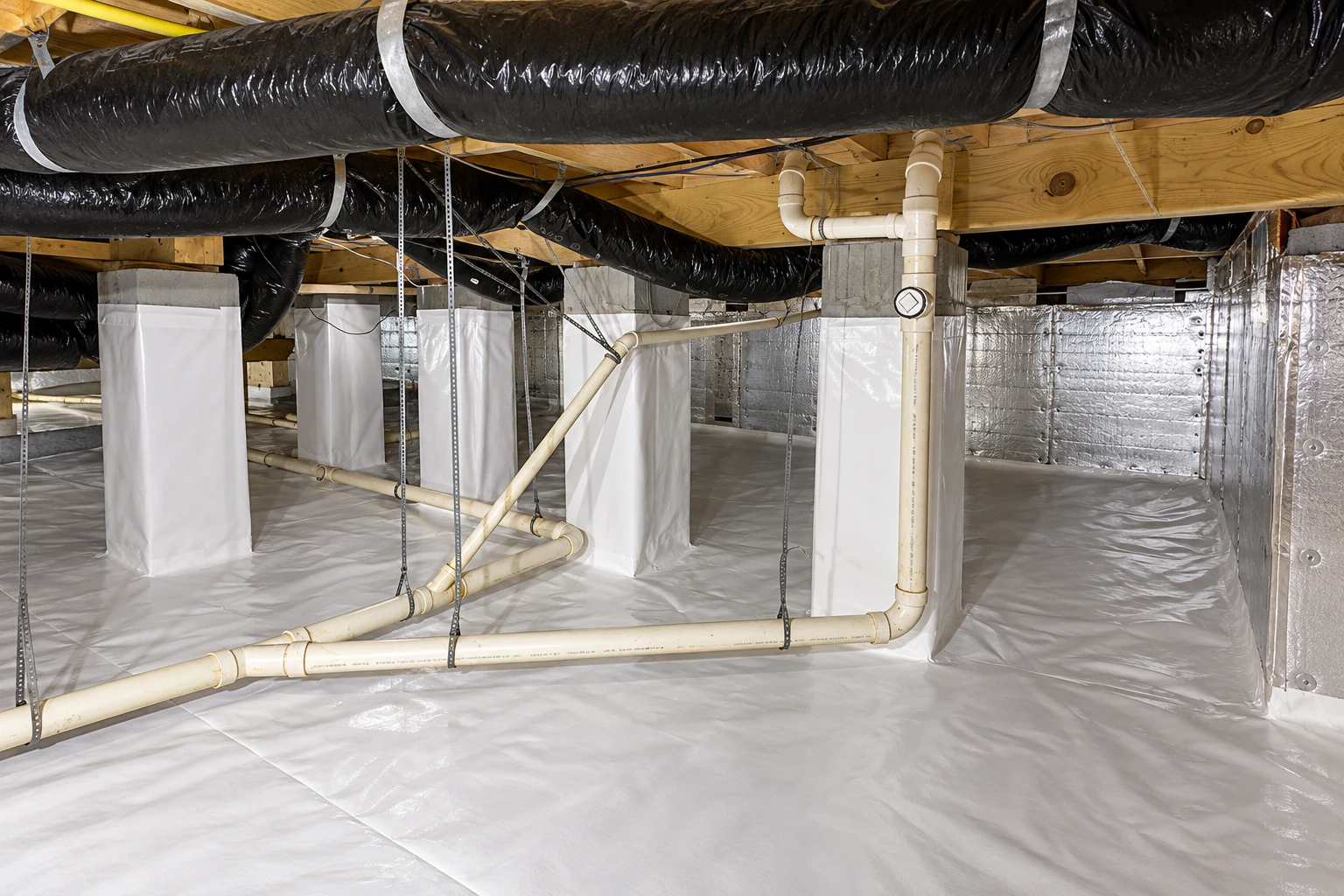
A crawl space vapor barrier is a plastic ground cover for the dirt floor under your house, and a well-installed one in a Duluth crawl space helps keep ground moisture and gases from the soil from rising into the rooms above.
Most people call us after they open the crawl space hatch and find bare dirt, a damp smell or an old sheet of plastic that's torn and bunched in the corners. The price moves with the size of the space, whether you want a basic ground cover or a fully sealed crawl space, how far up the walls and piers the liner runs, and whether water or drainage trouble has to be fixed first. The schedule mostly turns on that water work and on how much has to come out of the space before we start, so I'll give you the figure for your house in a free estimate once I've seen it in person.
We're based in Duluth and do this same work in Superior, Hermantown, Cloquet and other cities around the Twin Ports, where plenty of houses still sit over a crawl space with a dirt floor.
I come out to see your crawl space and write the estimate myself, and I'm on site with our crew when the liner goes in, so nothing gets lost between the visit and the work.
Like a kitchen finishing its prep before service, we do the checks first, because a liner laid over a problem we missed only hides it until it shows up somewhere worse.
When we finish, I walk you through what we found down there and what we did about it, and we leave your crawl space and the rooms we passed through clean.
The first thing I look for is water. Puddles, wet soil or water marks on the walls mean drainage work comes before any liner, because covering or sealing a crawl space that's still taking on water only traps the moisture under the plastic.
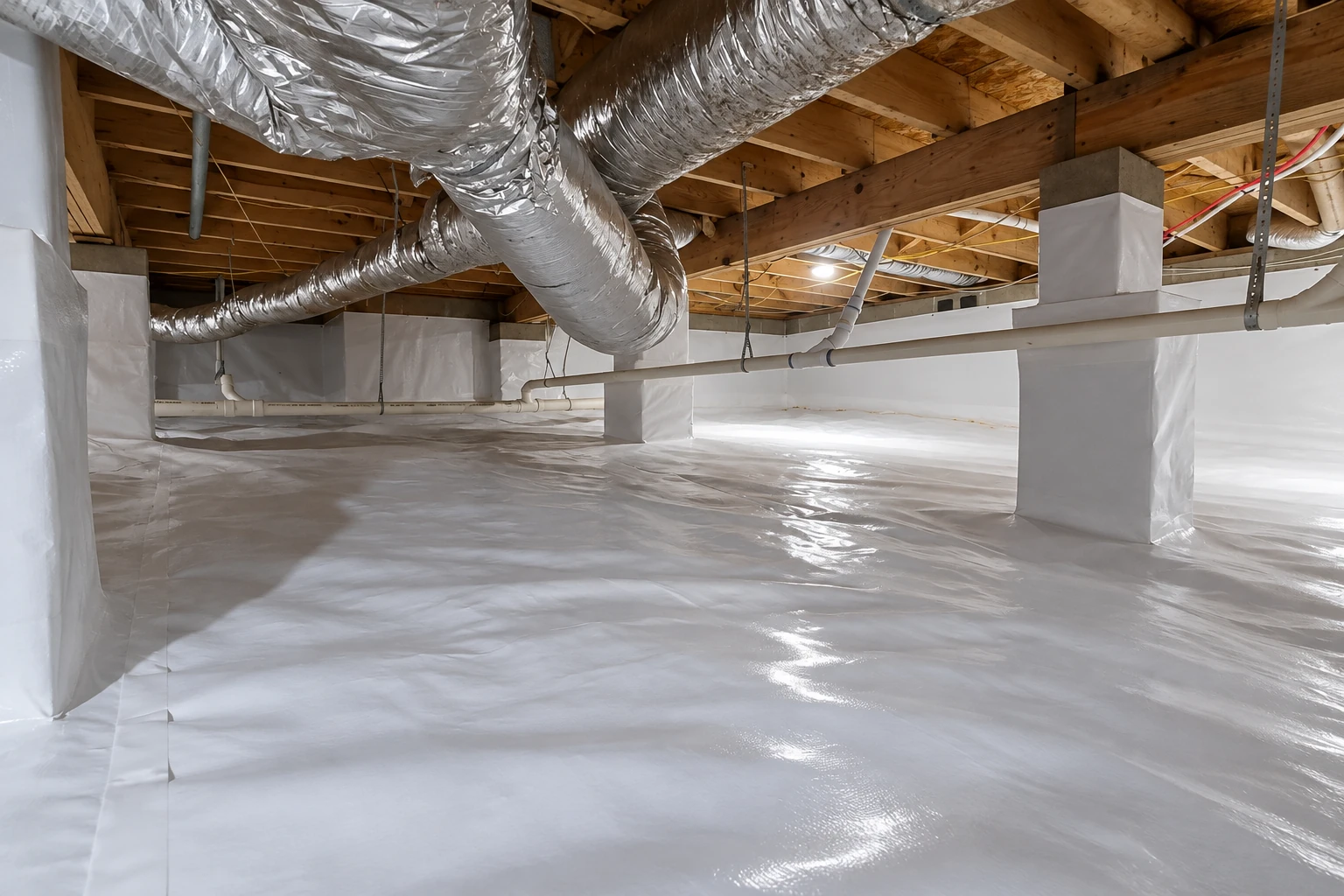
Then I help you choose between a basic ground cover, which is plastic laid over the dirt floor, and a fully sealed crawl space, where the liner is sealed at the walls and the space gets a way to dry its air. For most crawl spaces I'd start with a good ground cover, because it does the main job of holding ground moisture down for less money. A sealed space costs more and asks more of the house, and it earns that when your furnace or ductwork lives down there or you want the crawl space kept as dry as the rooms above it.
Whichever you pick, we run the liner as far up the walls and piers as the space lets us, since a sheet that stops where the floor meets the wall leaves an edge for moisture to come around. If you'd like the same kind of moisture control elsewhere, our vapor barrier installation work covers other parts of the house, and if the rooms upstairs run cold or you get ice dams, attic air sealing closes the gaps where warm air leaks out the top.
Exposed soil gives off moisture vapor that rises into the crawl space and the floors above it. A ground cover is the simplest way to hold that down before you do anything else.
One Duluth radon site reports that about 27 percent of St. Louis County properties tested came in at or above the EPA action level. A well-laid liner helps limit soil gases like radon.
If you keep things in the crawl space or have equipment that needs servicing, one building advice site suggests a thicker plastic sheet may be the better choice. I'll go over that at the estimate.
A liner is part of the prep for crawl space insulation, because a covered floor helps keep ground moisture away from the walls the insulation goes on.
Send the form and we'll reply within one business day to set a visit. I'll look at your crawl space myself and write up a free estimate, with no obligation. Thank you for reaching out.
Length and width, or the footprint of the house above it, is enough to start. Size sets how much liner we need and how much time the crew spends down there.
Tell us if you've seen puddles, wet soil or water marks on the walls. As I said above, water gets handled before the liner, so it shapes both the plan and the schedule.
Let us know if you store things in the crawl space or have a furnace or water heater there. Stored items need clearing, and equipment changes how we lay and seal the liner.
These photos show ground covers, liners run up foundation walls and seams around piers, so you can point to the finish and layout you'd like to talk through.
Here are the questions Duluth homeowners ask most before a crawl space liner goes in, answered the way I'd answer them on site.
A basic vapor barrier, just plastic over the dirt floor, usually runs about $0.50 to $1.50 per square foot across the US. That's the going range, not our price. Running the liner up the walls and piers, sealing the space, adding a dehumidifier or fixing water trouble first all raise it, and your free estimate gives the figure for your house.
The City of Duluth requires a building permit for the construction, enlargement, alteration, repair, moving, demolition or change in use of a building or structure, and either the owner or the contractor doing the work gets it. Before work starts, I check the permit rules with the city and tell you whether we'll pull the permit or what you'll need to do.
Minnesota requires a state license when the job covers more than one special skill. Anyone you hire for work in more than one needs a residential building contractor or remodeler license, and the state Department of Labor and Industry puts insulation and vapor barriers under interior finishing. A contractor doing only one special skill doesn't need one. We're fully licensed and insured.
For most homes a basic ground cover does the job, and full sealing makes sense when you want the crawl space kept as dry as the house. An older ENERGY STAR quick reference lists a sealed liner on the floor and walls, a dehumidifier or conditioned air to dry it, and kitchen, bath and dryer exhausts that end outside the space.
Yes, please clear out anything you've stored in the crawl space before our crew arrives. The ground cover needs to go down completely, and a liner that has to work around boxes and debris leaves bare spots. If something's too heavy to move, tell me at the estimate and we'll work out a plan for it.
We answer calls seven days a week, early morning to late evening, so call (218) 206-2942 or use the form when it suits you.